Posts

Showing posts with the label game design

Research on gameful design
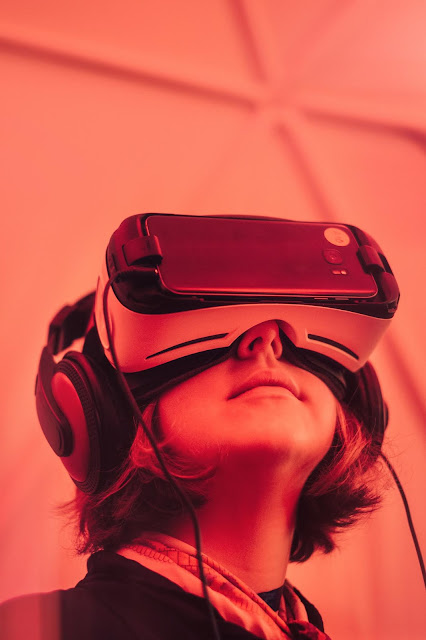
Image
Gamification: Toward a Definition Ref: Gamification: Toward a Definition ; Sebastian Deterding, Rilla Khaled, Lennart E. Nacke, Dan Dixon. Photo by Samuel Zeller on Unsplash I was reading the above mentioned paper regarding the term of gamification and its definition. I found some really interesting lines that I would like to share as notes. "A working definition of the term gamification is the use of game design elements in non-game contexts." I find this sentence pretty laconic, with a clear meaning and really interesting the fact that there is not any clue or reference to the the term of play, which unfortunately is often misinterpreted! Actually, the writers mention it nicely and clearly while analyzing the definition few paragraphs below, that "…we are talking about elements of games, not of play." Moreover, I found also interesting the approach of the terms play and use in the following quote regarding the term of element within t...
Games and User Experience

Image
Photo by Nikita Kachanovsky on Unsplash Why games? Let’s begin with this abstract question… why should we bring games into a discussion about User Experience in the enterprise software? Games deserve a huge respect! Games address the masses, and they do it successfully, if you consider the fact that each one of us has a game of any kind of her or his preference. Games, in the sense of a designated system constituted of rules and a purpose, exist already for a long time; they date actually back to the first traces of human civilization. In parallel, game research evolves all these years either through a trial-and-error practice or consciously as a theoretical term. Since the last four decades, games have also reached their digital era; images from video games deluge our visual culture, as well as our senses. Consequently, a new term has been established, the game experience. Game experience and numbers Let’s roughly check game experience interpreted in numbers. Analytic...

Nutzer sollen Kontrollgefühl behalten

Image
Wie gute Gamification funktioniert Photo by Ugur Akdemir on Unsplash Interview beim  meinungsbarometer.info

Playful oder Gameful User Experience

Image
Pixelwiesen 2015 - UX Symposium von Heidelberg Mobil Pixelwiesen 2015 - UX Symposium von Heidelberg Mobil

Bring Game Mechanics in all Applications

Image
Photo by Kelly Sikkema on Unsplash Three years ago, back in 2013, I visited Gamescom Congress, and although I have missed the first part since I did want to visit the exhibition, I was there for the second part. Its topic that year was “Game based learning”. I was very impressed by what is being done in Germany, and actually by what is being seriously done! Games are well-respected and appreciated, incorporated into the education process and supported by both public and private parties. Many foundations in cooperation with the state and universities are producing applications and initiatives targeting children and use game mechanics to approach and interpret their behavior. There was a special case study that was presented regarding a Dyscalculia-Training game! Kids with or without dyscalculia where triggered through a scenario to play mini games that challenged their responses in order to come to conclusion of whether they do or not and at which point have Dyscalculia. I furt...

User profiling done right!

Image
Among the discussion of a gameful user experience, one of game design’s key components is the user profiling. Photo by Glenn Carstens-Peters on Unsplash One case that belongs to the previous console generation and surprised me a lot with its spectacularly continuous flow was the very first race of Need For Speed Shift (PS3, XBOX 360, PC). The player was introduced to the new game by watching a trailer, and while the video was on, it prepared her/him progressively with imagery and finally prompted her/him to race, beginning with full throttle sitting on a pretty powered car. After finishing the race, the game itself would calculate the gamer’s behavior or performance and suggest to her/him a customized level of difficulty for starting the game. Remarkable flow!

Monetization affects overall Game Design

Image
Dragon Finga by  Another Place Productions Ltd I participated few years ago in the Web Game Conference 2013 that was held in June in Paris. One of the things I kept as a feedback was something mentioned regarding the approach to level design in games. It was said that monetization affects the overall game design. I have played a couple of days ago a new game for iOS in an iPad named “ Dragon Finga ”. Very cool as a concept, very smart non-realistic physics but very playful, nice and simple interaction, a clearly and purely mobile oriented game. It is actually a fighting game, but do not bring in your mind Tekken or Street Fighter! I would rather say that the game is totally awesome, but there is one thing that makes the game suck, and that is its monetization! The game is basically free, but there is a range of fancy points, numbers, stars, diamonds, rings or I do not even recall all these types of information on menu screens that make you want to leave just because you d...

A concept for Strategy games

Image
Photo by Felix Mittermeier on Unsplash In most of the competitive strategy video games (eg. “StarCraft”, “Rome Total War”) the player’s goal while playing a game scenario is to dominate by eliminating other players that compete in the same scenario. In reality, absolute dominance has never been accomplished, though under certain circumstances dominance within a defined chronological period and geographical area has been achieved (eg. Roman Empire). In non competitive strategy video games (eg. “SimCity”) the goal is to achieve a state of balance that will secure player’s survival within the scenario, but real-time interaction between the players is not supported. Apart from competitiveness, time is also one significant parameter in classification of strategy video games, based on which they are distinguished into real time (RTS) with continuous gameplay (eg. “Warcraft”, “Warhammer 40,000: Dawn of War”) and turn based (TBS) with discrete phases (eg. “Civilization”, “Heroes of Mig...

Game mechanics from the perspective of a UX Designer

Image
The Mechanics-Dynamics-Aesthetics (MDA) framework is a tool for game analysis presented by Robin Hunicke, Marc LeBlanc and Robert Zubek. Photo by rawpixel on Unsplash Game mechanics In their related paper titled as “MDA: A Formal Approach to Game Design and Game Research”, they present the triptych of Mechanics — Dynamics — Aesthetics as the design counterpart of Rules — System — Fun. To my understanding, this framework could not only be applied in the field of game design and research, but to any field that designs and establishes interactions with an end user, in order to enhance user experience. They also give a proper definition to the game mechanic: "Mechanics describes the particular components of the game, at the level of data representation and algorithms." First though, a few examples of game mechanics in popular games might give you a clearer insight, of what they are, and how strongly they form the game itself. Open World // Skyrim by Bethesd...