Posts

Showing posts with the label user experience

Research on gameful design

Image
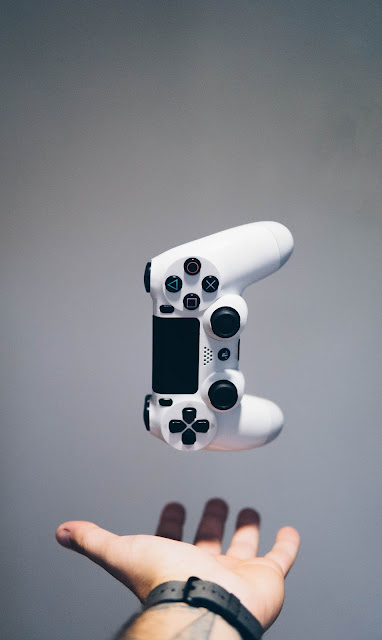
Gamification: Toward a Definition Ref: Gamification: Toward a Definition ; Sebastian Deterding, Rilla Khaled, Lennart E. Nacke, Dan Dixon. Photo by Samuel Zeller on Unsplash I was reading the above mentioned paper regarding the term of gamification and its definition. I found some really interesting lines that I would like to share as notes. "A working definition of the term gamification is the use of game design elements in non-game contexts." I find this sentence pretty laconic, with a clear meaning and really interesting the fact that there is not any clue or reference to the the term of play, which unfortunately is often misinterpreted! Actually, the writers mention it nicely and clearly while analyzing the definition few paragraphs below, that "…we are talking about elements of games, not of play." Moreover, I found also interesting the approach of the terms play and use in the following quote regarding the term of element within t...

Gameful but not necessarily playful User Experience

Image
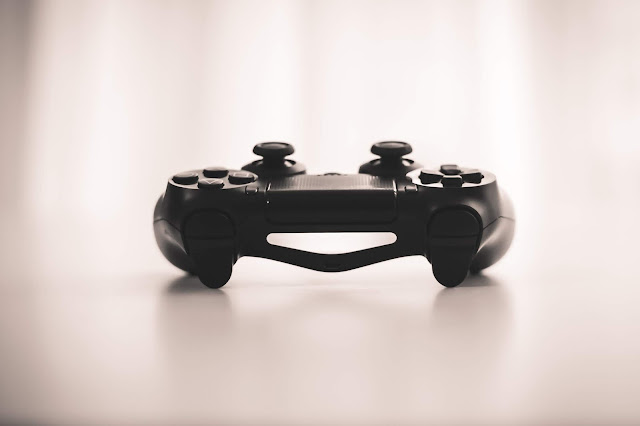
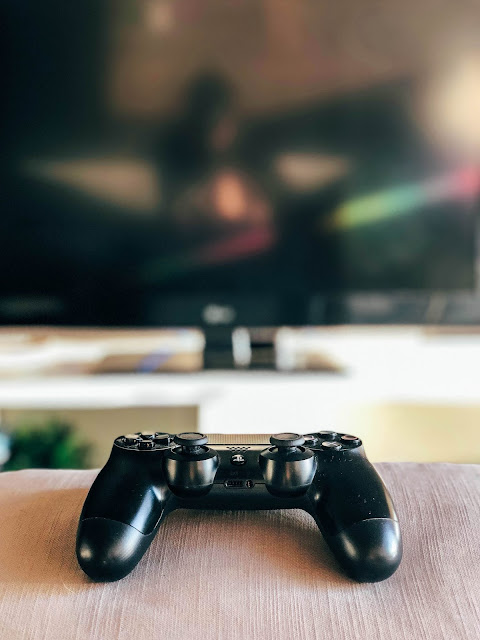
Photo by Esteban Lopez on Unsplash Gameful and playful What is actually the definition for gameful? Given by Sebastian Deterding, Dan Dixon, Staffan Björk, Elizabeth Lawley and Lennart Nacke in their paper with title Designing Gamification: Creating Gameful and Playful Experiences : "Gameful design … refers to the design of hardware and software in non-game contexts using design elements from games." And what is the definition for playful? Again given by Sebastian Deterding, Dan Dixon, Rilla Khaled and Lennart Nacke in their paper with title From Game Design Elements to Gamefulness: Defining “Gamification” : "… no consensual theory or terminology of playfulness has emerged so far." So, what could possibly define the term of playful? Given by Hannu Korhonen, Markus Montola and Juha Arrasvuori in their paper with the title Understanding Playful User Experience through Digital Games , playful is: "… to design something that is pleasurable to use...

Gameful but not gamified User Experience

Image
Photo by Chris Liverani on Unsplash Gamification The definition for gamification has been properly given by Sebastian Deterding, Dan Dixon, Rilla Khaled and Lennart Nacke in their paper with title From Game Design Elements to Gamefulness: Defining “Gamification” . That is: "… use of game design elements in non-game contexts." The term of gamification has been a bit of a buzz-word for the last few, maybe, years in the field of enterprise and consumer software. Apart from being used, it has been also clearly misused, bringing in mind mostly points, badges, top lists and attempts to motivation. Until someday, while searching for the term gameful, I came up to this really interesting quote by Jane McGonigal from her session with title We don’t need no stinkin’ badges: How to re-invent reality without gamification : "Within the video game and digital media industry, discontent with some interpretations have already led designers to coin different ter...

Games and User Experience

Image
Photo by Nikita Kachanovsky on Unsplash Why games? Let’s begin with this abstract question… why should we bring games into a discussion about User Experience in the enterprise software? Games deserve a huge respect! Games address the masses, and they do it successfully, if you consider the fact that each one of us has a game of any kind of her or his preference. Games, in the sense of a designated system constituted of rules and a purpose, exist already for a long time; they date actually back to the first traces of human civilization. In parallel, game research evolves all these years either through a trial-and-error practice or consciously as a theoretical term. Since the last four decades, games have also reached their digital era; images from video games deluge our visual culture, as well as our senses. Consequently, a new term has been established, the game experience. Game experience and numbers Let’s roughly check game experience interpreted in numbers. Analytic...

Nutzer sollen Kontrollgefühl behalten

Image
Wie gute Gamification funktioniert Photo by Ugur Akdemir on Unsplash Interview beim  meinungsbarometer.info

Gefahren von Gamification hinsichtlich des Themas Spielsucht

Image
Welche Gefahren können von Gamification hinsichtlich des Themas Spielsucht ausgehen? Photo by Hello I'm Nik on Unsplash Im Falle eines Systems, in dem die Gamifizierung so aufgesetzt ist, daß diese selbst zum eigenen Spiel wird, könnte es diese Gefahr geben. In diesem Fall, könnten Nutzer diese Teile so nutzen, daß diese nicht mehr zur Aufgabenerfüllung dient, sondern zur Ablenkung wird. Dies bedeutet aber auch im besten Fall den Fehlschlag des Designs, und im schlimmsten die dunkle Seite des Designs. Die Mechaniken per se haben keine Bedeutung für sich alleine, sondern können im Zusammenhang mit dem Nutzer-Szenario entweder unterstützen oder manipulieren.

Welche Anforderung stellt Gamification an den Nutzer

Image
Photo by Filios Sazeides on Unsplash Ich sehe das weniger als Anforderung, sondern eher als eingrenzende Leitung. Der Nutzer muss nur mit den von dem gamifizierten System gegebenen Werkzeugen und Funktionalitäten sein oder ihre Arbeit machen. Hier genau kommt aber die User Experience und das Design ins Spiel, bzw. wie erfolgreich die Mechaniken basierend auf das Nutzer-Szenario verwendet worden sind, so daß der Nutzer nicht von den Möglichkeiten des Systems ausgebremst wird. Ziel ist, daß die Nutzer nicht das Gefühl verlieren, daß sie den Überblick und die Kontrolle über den gesamten Ablauf haben. Pragmatisch gesehen, müssen sie ständig und transparent die Kontrolle über den Prozess der gesamten Tätigkeit haben. Daher sollte User Experience diese spielerischen Elemente nicht als unvermeidliche Hindernisse diesbezüglich hinzufügen, sondern diese als Realisierung der Offenheit bereitstellen.

Highscores, Fortschrittsbalken und virtuelle Belohnungen

Image
Welche Mechanismen wirken wo besonders gut? Photo by Leslie Jones on Unsplash Die Frage sollte eher sein, welche Mechaniken auf welcher Ebene wirken, als wo sie wirken.

Gamification sollen Arbeiten, Weiterbilden und Studieren durch spielerische Elemente schöner und effizienter machen

Image
Für welche Prozesse ist Gamification besonders geeignet? Photo by Caspar Rubin on Unsplash Gamification, so wie wir es bis jetzt aus Beispielen und Literatur kennen, war wie ein fremder Ansatz auf eine bereits existierende Welt, der leider nicht immer richtig in den Kontext passte. Auf eine Art ist es ironisch, daß besonders Weiterbildung oder Studium, welche schon seit Jahrzehnten gamifizierte Systeme sind, als reine Bereiche gelten, denen wir entweder von Grund auf oder weiter gamifizieren möchten. Rollenspiele (Lehrer und Schüler), Anpassungsmethoden (Schularten und Fachrichtungen), Stufen (Klassen), Erfahrungspunkten (Noten), Fähigkeiten und viele weitere Spiel-Mechaniken kann man beim Studieren entdecken.

Playful vs gameful user experience: Why are games important for UX design

Image
This talk was given in the Gamescom Congress 2017 , under the umbrella theme, “ More than gamification ”. The gamescom congress is Europe’s leading conference on the potential of computer and video games for society as well as the economy.

Playful vs gameful user experience

Image
Why are games important for user experience design? Photo by Lea Böhm on Unsplash Gamification was proved to be more of a buzzword than a real catalyst in enterprise software, that missed the distinction between play and game, misinterpreting the role of “motivation”. Nevertheless, game experience and game research have a lot to teach us, as designers, in understanding the human behaviour and this is what I would like to share.

Playful oder Gameful User Experience

Image
Pixelwiesen 2015 - UX Symposium von Heidelberg Mobil Pixelwiesen 2015 - UX Symposium von Heidelberg Mobil

The “WH” Questions of UX

Image
And why I needed video games to point them out! Photo by rawpixel on Unsplash I play video games, I love actually playing video games, not in a blindly addicted way, rather in a more explorative way, I love the culture around it. I also like watching people playing games, not in the typical way over twitch, but observing their behavior as they are progressing through visual and emotional experiences. While studying it, I keep getting fascinated of how game design handles design matters, develops them and gives design solutions that offer unlimited hours of engagement. In parallel, user experience in consumer and enterprise applications does focus extensively in the functionality and in the use cases, which both formulate the applications. Fun, flow, gameful, colorful, minimal, functional, multilevel, material, all these aspects are gathered and addressed with smart design solutions. Though, a major aspect that game design struggles with is keeping the users engaged for hours...

Super Mario and Gamification

Image
Photo by zengxiao lin on Unsplash Why people (or kids) have actually started and continued playing Super Mario? This continuity started with the very first versions for NES and is up to date with more sophisticated interactive systems, and people still repeat the levels playing again and again! Is it actually the “coinification” that motivates them? The coins constitute a quantitative aspect of the completion of the game. There are other aspects as well such as time, mushrooms, goombas and so on. Is it maybe the overall gameplay that is attractive and engages masses of gamers playing each version that comes up? According to Wikipedia, “Gameplay is the specific way in which players interact with a game, and in particular with video games. Gameplay is the pattern defined through the game rules, connection between player and the game, challenges and overcoming them, plot and player’s connection with it. Video game gameplay is distinct from graphics, and audio elements.” Succes...

Gamification and motivation

Image
Photo by Alex Radelich on Unsplash It is said in the definitions of Gamification that one of the scopes is to bring motivation to the user — or employee since we mostly talk about Enterprise Software! I would rather ask why to do that? Is it actually possible? I would not claim myself as a Marxist, but maybe we should consider some of Marx’s statements since we talk about workers. Employees use enterprise software in their daily tasks because they have to! Where is any motivation in that? How could that be possibly fun? To make that software easier to use is another story which I believe is the solution that fits, but to bring the motivation to the employee via gamified tools and saying that he would have fun by doing it, is something that by definition does not fit. The definition is that the employee has to go to work, has to work, has to use company tools and complete the daily tasks. In the best case, even if someone does a job that she or he has studied, which finds inte...

Bring Game Mechanics in all Applications

Image
Photo by Kelly Sikkema on Unsplash Three years ago, back in 2013, I visited Gamescom Congress, and although I have missed the first part since I did want to visit the exhibition, I was there for the second part. Its topic that year was “Game based learning”. I was very impressed by what is being done in Germany, and actually by what is being seriously done! Games are well-respected and appreciated, incorporated into the education process and supported by both public and private parties. Many foundations in cooperation with the state and universities are producing applications and initiatives targeting children and use game mechanics to approach and interpret their behavior. There was a special case study that was presented regarding a Dyscalculia-Training game! Kids with or without dyscalculia where triggered through a scenario to play mini games that challenged their responses in order to come to conclusion of whether they do or not and at which point have Dyscalculia. I furt...

User profiling done right!

Image
Among the discussion of a gameful user experience, one of game design’s key components is the user profiling. Photo by Glenn Carstens-Peters on Unsplash One case that belongs to the previous console generation and surprised me a lot with its spectacularly continuous flow was the very first race of Need For Speed Shift (PS3, XBOX 360, PC). The player was introduced to the new game by watching a trailer, and while the video was on, it prepared her/him progressively with imagery and finally prompted her/him to race, beginning with full throttle sitting on a pretty powered car. After finishing the race, the game itself would calculate the gamer’s behavior or performance and suggest to her/him a customized level of difficulty for starting the game. Remarkable flow!

PSN and XBOX Live: ecosystems in terms of user experience?

Image
I have heard the term “ecosystem” in some podcasts regarding video gaming and must say that found pretty interesting the way they approach it. Sony and Microsoft have indeed raised the concept of an ecosystem within the video games community. Maybe is important to make a slight reference to the first generation of Playstation which was said to have first introduced video gaming into a new level of social recognition and raise it into culture. Previously, Nintendo and Sega’s competition indeed made video games popular but in a more cult manner. Playstation addressed older ages and managed to gain recognition and introduce video games as a cultural aspect. Further evolution has developed the notion of the culture and addressed a broadened field of ages and social groups as gamers, and brought them together by grounding active communities per game title and console. This evolution has contributed into the current status of Playstation Network and XBox Live with millions of active gam...

Is User Experience a marxist approach by its definition?

Image
"Let us suppose that we had carried out production as human beings. Each of us would have, in two ways, affirmed himself, and the other person. (1) In my production I would have objectified my individuality, its specific character, and, therefore, enjoyed not only an individual manifestation of my life during the activity, but also, when looking at the object, I would have the individual pleasure of knowing my personality to be objective, visible to the senses, and, hence, a power beyond all doubt. (2) In your enjoyment, or use, of my product I would have the direct enjoyment both of being conscious of having satisfied a human need by my work, that is, of having objectified man’s essential nature, and of having thus created an object corresponding to the need of another man’s essential nature. (3) I would have been for you the mediator between you and the species, and therefore would become recognised and felt by you yourself as a completion of your own essential nature ...

How “fun” could be interpreted in gaming

Image
The scope of gamification is to bring game mechanics into business applications in order to engage users. Photo by Bao Truong on Unsplash The word “fun” is often used in terms of what a gamified application could possibly be like while interacting with users. But is it actually fun that motivates people to play a game as simply as that or is it a more complex notion between fun, competition, socialisation etc.? Maybe it is, but the thing is that silly badges or “comic sans” fonts or any simplified interpretation of the term “fun” is not what defines the motivation of a gamer. Core gamers might have severer sense concerning their visual culture than the business world, mostly because it has been cultivated through many hours of playing and investing on a brunch that has been developed and evolved into a very “serious” business.